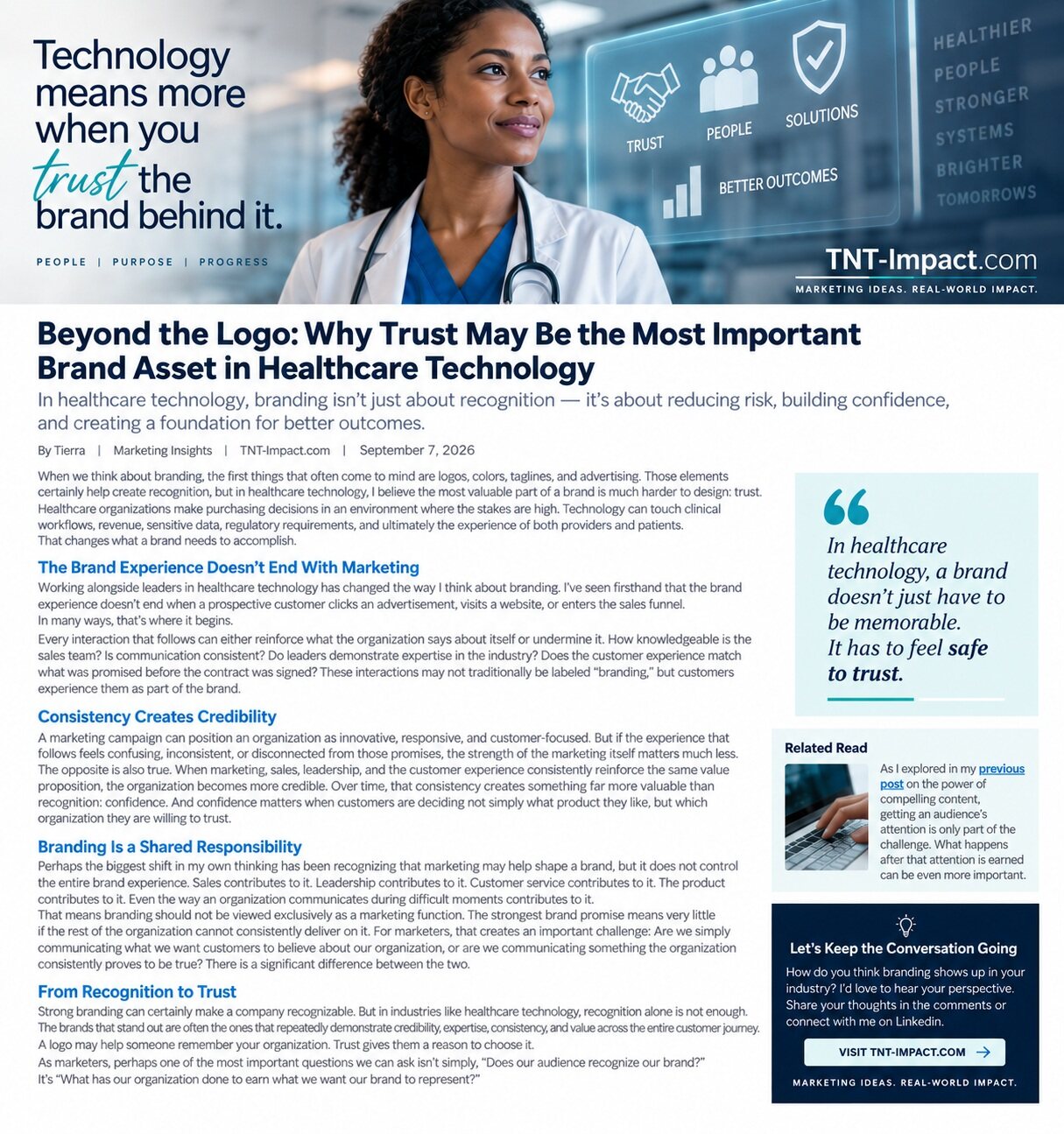
In healthcare technology, branding isn’t just about recognition—it’s about reducing risk, building confidence, and creating a foundation for better outcomes.
When we think about branding, the first things that often come to mind are logos, colors, taglines, and advertising. Those elements certainly help create recognition, but in healthcare technology, I believe the most valuable part of a brand is much harder to design: trust.
Healthcare organizations make purchasing decisions in an environment where the stakes are high. Technology can touch clinical workflows, revenue, sensitive data, regulatory requirements, and ultimately the experience of both providers and patients. That changes what a brand needs to accomplish.
The brand experience doesn’t end with marketing
Working alongside leaders in healthcare technology has changed the way I think about branding. I’ve seen firsthand that the brand experience doesn’t end when a prospective customer clicks an advertisement, visits a website, or enters the sales funnel. In many ways, that’s where it begins.
Every interaction that follows can either reinforce what the organization says about itself or undermine it. How knowledgeable is the sales team? Is communication consistent? Do leaders demonstrate expertise in the industry? Does the customer experience match what was promised before the contract was signed? These interactions may not traditionally be labeled “branding,” but customers experience them as part of the brand.
In healthcare technology, a brand doesn’t just have to be memorable. It has to feel safe to trust.
Consistency creates credibility
A marketing campaign can position an organization as innovative, responsive, and customer-focused. But if the experience that follows feels confusing, inconsistent, or disconnected from those promises, the strength of the marketing itself matters much less.
The opposite is also true. When marketing, sales, leadership, and the customer experience consistently reinforce the same value proposition, the organization becomes more credible. Over time, that consistency creates something far more valuable than recognition: confidence. And confidence matters when customers are deciding not simply what product they like, but which organization they are willing to trust.
Branding is a shared responsibility
Perhaps the biggest shift in my own thinking has been recognizing that marketing may help shape a brand, but it does not control the entire brand experience. Sales contributes to it. Leadership contributes to it. Customer service contributes to it. The product contributes to it. Even the way an organization communicates during difficult moments contributes to it.
That means branding should not be viewed exclusively as a marketing function. The strongest brand promise means very little if the rest of the organization cannot consistently deliver on it. For marketers, that creates an important challenge: Are we simply communicating what we want customers to believe about our organization, or are we communicating something the organization consistently proves to be true?
From recognition to trust
Strong branding can certainly make a company recognizable. But in industries like healthcare technology, recognition alone is not enough. The brands that stand out are often the ones that repeatedly demonstrate credibility, expertise, consistency, and value across the entire customer journey. A logo may help someone remember your organization. Trust gives them a reason to choose it.
As marketers, perhaps one of the most important questions we can ask isn’t simply, “Does our audience recognize our brand?” It’s “What has our organization done to earn what we want our brand to represent?”