
Artificial intelligence is changing how quickly organizations can generate content, interpret data, and execute marketing and go-to-market strategies. Yet speed and scale do not automatically create relevance, trust, or meaningful business outcomes. As more professionals gain access to similar tools, the question becomes less about who can produce the most and more about who can apply technology with intention. Which distinctly human capabilities will matter most as AI becomes embedded in everyday work? Five professionals spanning executive leadership, marketing, technology, and brand strategy offer perspectives on what people must continue to bring to the equation.
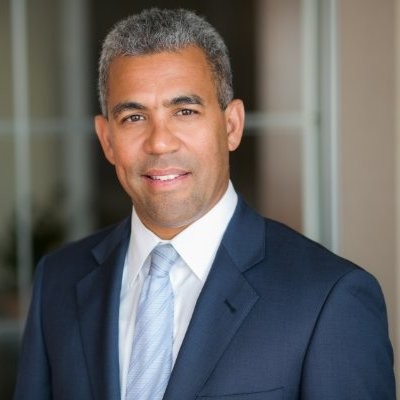
Eric Maldonado
Chief Sales Officer, Inovalon
View Eric Maldonado’s full quoteThe human qualities that will be more valuable in the world where AI is becoming more prevalent in our GTM function are:
Authenticity - Insuring that we communicate with our constituents ; clients, partners, and associates that the message being delivered will land with clarity, and leave the listener feeling like we are addressing them or their needs specifically.
Outcome orientation - Insuring that we set real expectations on outcomes expected and accountability for those outcomes. AI can play a significant role in making us better, faster, and less expensive to get tasks accomplished - but has to be done with the proper outcome in mind and that no matter what tools or technologies are used in to deliver, an human is accountable for the outcome.

Brandon Bowers
Senior Vice President, Provider Sales, Inovalon
View Brandon Bowers’s full quoteCuriosity is one of the most important qualities professionals can bring to the age of AI. Rather than viewing AI as something that will replace us, we should continuously look for opportunities to apply it to our work, drive productivity and efficiency, and augment what we already do well. As AI continues to evolve, professionals will also need to commit to being lifelong learners—learning it, using it, applying it, and evolving alongside it.

Karen Torres
Marketing and Communications Professional | FIU MSM Graduate
View Karen Torres’s full quoteAs AI becomes more integrated into marketing and communications, I think overall judgment and audience insight will be most valuable. AI can definitely support the work and amplify what we’re able to produce, but the quality of the output still depends heavily on the person guiding it and knowing what to ask for, what’s worth keeping, what feels off and what will actually resonate with the people you’re trying to reach. In a field where AI may make some organizations question whether they need a marketing or communications specialist at all, the professionals who continue sharpening those instincts will be the ones who prove why the human behind the tool still matters.

David J. Hodges
Salesforce CRM Leader | Business Transformation | FIU MSM Graduate
View David J. Hodges’s full quoteAs AI continues to transform the marketing landscape, I believe critical thinking and strategic decision-making will become increasingly valuable. AI can analyze data, identify patterns, and generate recommendations at remarkable speeds, but it still takes human insight to challenge assumptions, understand context, and determine which opportunities are worth pursuing. The professionals who stand out will not simply be those who know how to use AI, but those who can think beyond its output and translate information into meaningful, purposeful action.

Anthony Miyazaki
Brand Strategist and Marketing Educator
View Anthony Miyazaki’s full quoteThe more technology becomes part of how we communicate, the more important it will be to understand the people on the other side of that communication. AI can help us reach more people, but understanding and empathy are what allow us to truly connect with them. Genuine connection begins with recognizing another person’s needs, experiences, and perspectives rather than simply finding more effective and efficient ways to deliver a message. In an increasingly AI-mediated world, our capacity to understand, empathize, and connect will become some of the most valuable qualities we bring to our professional relationships.
What These Perspectives Mean for the Future of Marketing
Across these perspectives, a shared distinction emerges: AI can expand what professionals are able to produce, but it does not eliminate the need to decide why the work matters or whether it serves the intended audience. Maldonado grounds that responsibility in authenticity and accountability. Bowers adds that the ability to benefit from AI begins with curiosity, practical experimentation, and a commitment to continuous learning. Together, their insights suggest that adopting technology is not simply a technical decision; it is also a leadership decision about how people work and what outcomes they own.
Torres and Hodges sharpen this argument by separating output from judgment. Producing an answer is not the same as knowing whether it is the right answer. A marketer must still recognize audience needs, challenge assumptions, identify what feels inauthentic, and translate information into decisions that advance a larger strategy. Miyazaki extends the conversation beyond performance metrics: even the most efficient communication fails its purpose when it overlooks the human being receiving it. These capabilities are complementary, not competing. Curiosity helps us discover what AI can do; critical thinking and judgment help us decide what it should do; empathy and accountability help ensure the result deserves an audience’s trust.
For marketing professionals, the opportunity is therefore not to compete with AI on volume or speed, but to become more deliberate about the value only people can contribute. The future belongs to those who can combine technological fluency with thoughtful decisions, clear ownership, and genuine connection. AI may accelerate the delivery of a message, but human insight determines whether that message is worth delivering—and whether it matters once it arrives.